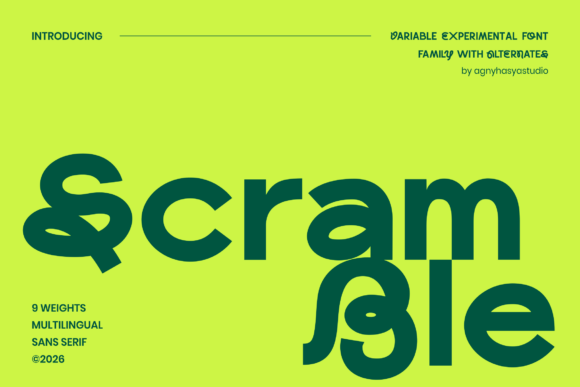
Scramble: A Variable Experimental Sans-Serif Font
Sometimes, a project demands type that feels alive—letters that seem to move, shift, and defy the rigid grid of traditional typography. That’s exactly the energy captured in Scramble, a variable experimental sans-serif font designed to explore fluid motion and unconventional letterforms. It’s a creative tool built for designers who want to inject dynamism and personality into their work, moving beyond static text to create a true visual experience.
With a full weight range from Thin to Black, Scramble offers remarkable versatility for bold display typography. This isn’t just a single-style font; it’s a complete spectrum of expression. The thinner weights provide delicate, kinetic details perfect for subtle accents, while the heavier weights deliver powerful, impactful statements that command attention. This range makes it an excellent choice for creative branding, posters, editorial covers, and any artistic project where the typeface itself becomes a central design element.
Where Scramble Shines: Creative Applications
Understanding a font’s strengths helps you deploy it effectively. Scramble’s unique character makes it particularly well-suited for projects that thrive on energy and modernity. Consider using it for:
- Logo Design & Brand Identity: A logotype set in Scramble can instantly communicate innovation, creativity, and a forward-thinking brand personality. It’s perfect for tech startups, creative agencies, music labels, or any brand that wants to stand out.
- Poster & Editorial Design: The font’s expressive forms are ideal for headlines in magazines, event posters, book covers, and album art. It grabs the viewer’s eye and sets a compelling tone for the entire layout.
- Packaging & Social Media Graphics: On product labels or Instagram stories, Scramble can make key messages pop. Its fluidity translates well to both print and digital, helping create cohesive visual campaigns across platforms.
- Web Design & Digital Products: Used strategically for headings, hero sections, or call-to-action buttons, it can add a layer of visual interest and modern flair to a website or app interface.
When pairing Scramble with other typefaces, look for a complementary serif font or a clean, neutral sans-serif to create balance. Let Scramble be the star for headlines and display text, while using a more traditional font for body copy to ensure readability. This contrast creates a polished, professional hierarchy that guides the reader’s eye.
Tips for Choosing and Using This Creative Font
Before integrating any new premium font into your workflow, a few practical steps can ensure success. First, always test the specific weight and style you intend to use in context. View Scramble at the size it will appear in your design to check its readability and impact. Its experimental nature means it’s built for display sizes, so it may not be suitable for long paragraphs of body text.
Next, consider the mood of your project. Scramble’s motion and unconventional shapes evoke feelings of energy, creativity, and modernity. It’s an excellent fit for projects in fashion, entertainment, art, and innovation. If your project requires a more conservative or traditional tone, a classic serif font or a geometric sans-serif might be more appropriate.
Finally, review the font’s license to ensure it covers your intended use, whether for personal projects, client work, or commercial products. Investing in a well-crafted typeface like Scramble is an investment in your project’s visual identity. The right font does more than just display words; it enhances brand recognition, ensures visual consistency, and elevates the overall professional presentation of your work.
Choosing a typeface is a fundamental design decision. For projects that call for a burst of creative energy and a break from the conventional, Scramble provides a versatile and visually engaging solution. Its variable weight axis and distinctive character offer a unique way to bring your boldest ideas to life, making it a valuable asset in any designer’s toolkit.